In mystery stories, one commonly used
plot device is the red herring, which involves false information that
diverts the audience's attention away from something important. This
method is often forgiveable, especially when it is easy to make
incorrect assumptions despite the truth being available. Human
emotions can easily distract, so when these are emphasized in a story
and key elements are overlooked, the audience will appreciate their
discovery of the truth later, especially when they can look back and
see what they missed. However, bad writing sometimes involves a red
herring that is not paired with any useful information at all, so
when the big surprise is revealed at the end, people will be angry if
they never had even a small chance to figure it out in the first
place.
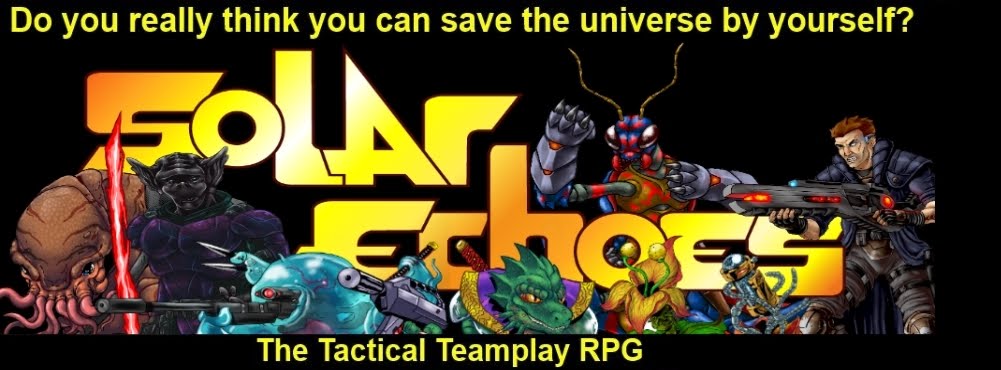
As seven alien races struggle to co-exist in an uneasy alliance, the Inter-Stellar Union sends Union Guard agents on missions to preserve the crucial balance. These specialized operatives must do what regional security cannot, dealing with smugglers, pirates, terrorists, and even greater challenges in order to bring stability to a universe that needs it desperately. Without the Union Guard, the races will not be prepared to face a looming alien threat they can only hope to defeat together.
Wednesday, July 31, 2019

Tuesday, July 30, 2019
Plot Devices: Should we use them? (part 2)
It is often the case that an author
creates so many problems and so much tension in a story that it is
nearly impossible to write a believable, satisfying resolution.
You've seen it happen before—the villains are about to triumph and
just when there is no possible way for the protagonist to recover,
some hero arrives unexpectedly out of nowhere, just in time to rescue
everyone. This kind of plot device is the type that will sour an
audience that might retaliate with bad reviews and complaints,
possibly even starting a petition demanding that things be rewritten!
Plot devices that cause the audience to lose their suspension of
disbelief should obviously be avoided, but not all plot devices are
bad. Some of these techniques are useful in conveying a side of the
story you might not otherwise be able to enjoy, and some create a
sense of mystery...
Monday, July 29, 2019
Plot Devices: Should we use them? (part 1)
Have you ever tried writing a story and
run into problems that are somehow preventing you from advancing the
plot? When the narrative stalls or comes to a complete impasse, the
solution to moving forward again might involve the use of a plot
device. Simply put, a plot device is a technique that is used to help
move the plot forward. What is the technique, though, and how is it
used? There isn't just one specific technique that can be used,
because there are a number of different problems that can emerge when
writing, and each of these might require the use of a different plot
device. As an example, however, a fairly common plot device is known
as “deus ex machina,” which involves something improbable
happening that resolves all problematic situations and allows the
story to conclude with a happy ending. However, this type of plot
device sometimes results in the audience crying foul, and acceptance
levels for the convenient happy ending vary among the audience.
Friday, July 26, 2019
VR Report (part 5)
Spiderman: Far From Home is a VR game
trial that is free to download. No news of a full VR game release
yet, but after playing this “demo” of sorts, I have to say that
I'm ready to buy the game when it's ready. The graphics were sub-par,
admittedly, but honestly, I didn't care very much because being
Spiderman was an absolutely incredible experience! Jumping off that
first skyscraper and falling towards the ground is a literal rush as
you feel your heart jump into your throat, but this is soon followed
by reaching out and shooting a web strand to a building. Suddenly you
are swinging at tremendous speed between buildings, reaching out your
other hand to shoot another web strand, and then another! Sometimes
I'd shoot strands simultaneously, pull my arms in and vault myself
straight up into the air. Other times I'd bring the strands together
to create a giant, sticky web. And in some situations, I'd shoot
flying drones out of the sky with little bursts of web from my wrist.
It was all an incredible experience, and it further convinced me that
THIS is what VR games should be about—being a different person and
doing something incredible that you can't experience in real life (or
maybe wouldn't want to risk!) As kids, we all imagined being someone
else and pretended to be a police man, a cowboy, an astronaut, a
knight, a superhero, a giant, a dragon, an alien from outer space, or
anything else that felt impressive or fun. VR is the chance for us to
pretend again, so game developers, please! Don't pump out another VR
version of an existing game, and don't give us yet another wave
shooter. I bought a VR headset because I wanted to immerse myself in
new worlds as another person doing amazing things that aren't part of
my normal, everyday life!

Thursday, July 25, 2019
VR Report (part 4)
Though I complained about initial
prices for the previous two games being too high, I was recently
given a gift card that I decided to use for an expensive ($40) game
called “Focus on You.” The price might feel too high for some,
especially considering that the game is on the short side, but the
production quality and the innovative concept of the game drew my
curiosity. Focus on You (no spoilers) is about your encounter as a
teenage boy with a teenage Asian girl in a coming of age experience.
You can adjust the spoken language to either Japanese or Korean, and
English subtitles will be displayed (which did break my immersion a
little, sadly.) This “snapshot” of life really captured the
experience of a first crush in a way that brought back memories of my
own high school and early college dating before I was twenty. The
shy, awkward, cute exchanges, the subtle nuances in expression and
body language, and the exciting build of hope that interest is
shared—all of this brought back those innocent memories of a first
girlfriend. The game focuses on shared experiences, such as that
first meeting at a coffee shop, a moment in the school stairwell, and
even a trip to the beach. As a player, you can actually speak the
dialogue choices presented and your voice triggers the
choice—something I'd like to see in more interactive games. You can
also manipulate objects around you, like filling a cup with coffee,
taking pictures with your camera, or interacting with your smartphone
to deter an annoying friend from disrupting your date. The short
romantic story involves some light-hearted emotions and to date,
shows the most realistically acted/animated VR character I've seen
yet. It might all seem a bit cheesy to some, but if a VR game can
capture this level of nuance and create this level of immersion, I'm
excited to see more games involving characters with realistic voice,
facial animation, and motion acting like this! And to be honest,
going through this game in VR has placed the entire VR-simulated date
in my memory as if it actually happened to me in the past!

Wednesday, July 24, 2019
VR Report (part 3)
Batman: Arkham VR is another VR game I
bought on sale for half price that was priced, in my opinion, too
high when it was released when the PSVR hit the market. The game is
short, but there are plenty of unlockable incentives if you'd like to
keep playing, such as solving the Riddler's riddles and unlocking
different character models you can look at in 3D. The part I liked
most about the game, however, was the feeling that I was Batman.
Looking at myself in a virtual mirror and seeing me, as Batman,
moving exactly as I'm moving...that's an experience that really
enhanced the immersion when I was flinging batarangs around at
objects. I also really enjoyed using Batmans various gadgets, but the
thrill of pretending to be someone else and seeing the represented in
the game—that's something I really want to see more developers
focusing on! I do wish the developers had done more with this,
because there were a lot of missed opportunities like riding in the
batmobile, gliding down from roofstops, or getting pulled rapidly
upwards with a grapple-cable. I wanted to engage in a fist fight
using Batman's martial arts moves, but at least I got to watch a
recorded replay of Nightwing fighting a villain. I understand,
though, that at the time of the game release, a lot of developers
were being very careful with movement to avoid making a player sick
and dizzy. These days, developers have found lots of alternatives and
tricks for player comfort, and many of us have found our “VR legs,”
so I hope to see another Batman game that further explores what being
Batman is all about.

Tuesday, July 23, 2019
VR Report (part 2)
Superhot is a VR game I bought recently
when it was on sale for half price. The game released on PSVR only a
few months after the PSVR itself hit the market, but I didn't want to
support the bloated pricing strategies developers had initially for
anything that had even a small VR moment included. Thankfully, prices
for VR games have settled into reasonable and fair ranges in most
cases these days. When I tried out Superhot for the first time, I was
not thrilled with the low-detail graphics, but the graphics were not
the point—the game was immediately immersive. In each scenario I
found myself in, there were different objects I could grab and use
against my enemies, who were often armed with firearms. I soon
learned that their attacks and the bullets speeding towards me only
moved if I did, at a rate mirroring my own rate of movement. If I
moved slowly, so did the bullets, but if I fired a gun back, the
bullets sped up. I felt like I was Neo in the Matrix, using a
“bullet-time” slow-motion approach to dodge bullets, grab guns
out of the hands of enemies, throw knives and bottles, and even block
attacks with whatever I had on hand. This extremely innovative game
made me feel like I had time-bending abilities, and I could affect
the flow of time like a superhero, such as “The Flash,” moving
around like I was in a slow martial arts ballet of death.

Subscribe to:
Posts (Atom)