Despite all this research, however, the
results that were published are still considered preliminary and
more needs to be done to clarify the role of oxytocin and the genes
that influence it. However, researchers are still confident that this
may lead to treatments for a variety of social disorders. The
question is, is introversion a social disorder? Methylation is a
dynamic process that can change to varying degrees over the course of
a person's lifetime. For example, I took the Myer's-Briggs
personality test when I was in college, and I was categorized as an
extrovert. I took it again a year ago, and now I'm a borderline
introvert. You wouldn't know it—I have to give lectures, talk with
a variety of people every day, and sometimes I even need to assert
myself for many hours in sales situations, but I will admit, I am
feeling more exhausted by social environments these days than I used
to be. I attribute it to age, but maybe there's more to it? Maybe I
am becoming more of an introvert...I do prefer to stay at home in my
basement and remain off-grid for days at a time. Is that so wrong?
Some don't think so...
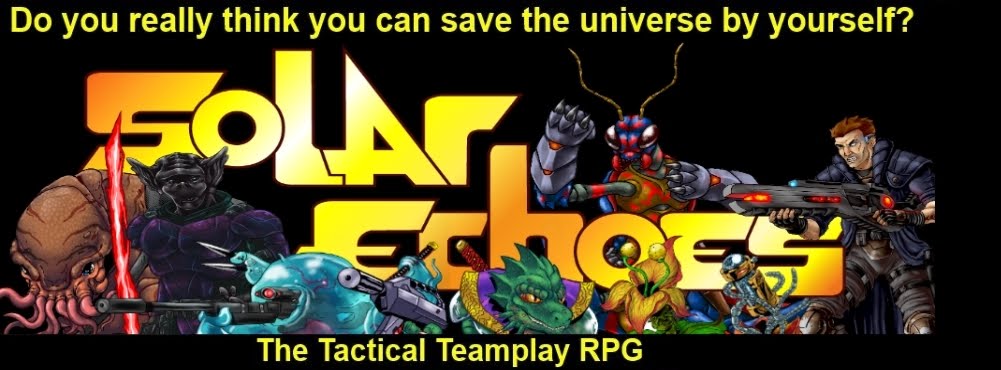
As seven alien races struggle to co-exist in an uneasy alliance, the Inter-Stellar Union sends Union Guard agents on missions to preserve the crucial balance. These specialized operatives must do what regional security cannot, dealing with smugglers, pirates, terrorists, and even greater challenges in order to bring stability to a universe that needs it desperately. Without the Union Guard, the races will not be prepared to face a looming alien threat they can only hope to defeat together.
Thursday, June 30, 2016

Wednesday, June 29, 2016
Science and Personality (part 3)
During a study of social behavior,
participants were evaluated through a number of tests that measured
their social skills, their brain structure, and its function. They
were presented with videos of people's faces, beginning with a
neutral expression that gradually changed into an emotional
expression--the participants just needed to press a button when they
were confident of how that person was feeling. Participants with
greater methylation of the OXT gene (and thus, had lower oxytocin
levels) were less accurate in their descriptions of the emotional
states of the people in the videos and pictures. This same
characteristic is associated with autism. Participants also had their
brains scanned with an MRI during some of the testing, and the
results showed reduced activity in areas of the brain associated with
sociability. It was also discovered that the participants had reduced
amounts of grey matter in areas important for face processing and
social cognition.
Tuesday, June 28, 2016
Science and Personality (part 2)
If you're on the fence as to which
category you fall into, ask yourself a few questions. Do you feel
recharged by being around people, or drained? If the latter, you are
probably an introvert. Do you more carefully consider your words, and
speak up only if there is something meaningful to say? Introvert. Do
you prefer to stay at home, work alone, and avoid parties? Again, you
are most likely an introvert. That's not to say that extroverts don't
have some of the same characteristics, but it is less likely. So why
are introverts this way? According to recent research in a study of
129 people, those found with less of a particular gene had more
difficulty recognizing emotional facial expressions. As a result,
they tended to have more anxiety about relationships, which greatly
impacted their social behavior. Scientists found when the gene OXT
was restricted by a process called “methylation,” participants in
the study produced less oxytocin, a hormone that plays a part in
human bonding...
Monday, June 27, 2016
Science and Personality (part 1)
How many of you would consider yourself
an introvert? Wow, ok, a lot of you. Now let's add to that those of
you who were too shy to even admit you're an introvert. Despite what
we may think (or might have been told based on a 1960 estimate that
has circulated the internet for decades), introverts are not in the
minority in our society. Based on a random sample conducted by the
Myers-Briggs organization in 1998, 50.7% of the population in the
U.S. are Introverts! Yet why is everything, from class participation
to college and job interviews seemingly based on having the
characteristics of an extrovert? Those that talk a lot are often
those that are picked for leadership positions over people who talk
more sparingly. We teach our kids to be more assertive, to speak up,
but as a result, introverts often struggle to defy their natural
state of mind in order to be accepted in a society that judges them
rather harshly for being quieter than others. And now, there is
research that this condition can be “cured...”
Friday, June 24, 2016
Preview of New Products (part 5)
Probably one of the more ambitious
projects I've been working on is developing 3D miniatures for the
Solar Echoes game. For those of you that have played the game and
have been frustrated that the stand-up paper icons sometimes blow
over or get easily toppled by stray dice, this may be an even better
alternative. And of course, for hobbyists, there's the opportunity to
have and paint an awesome 3D sculpture of your favorite Solar Echoes
character! I've been working with artist Jeremy Gosser on bringing
two Solar Echoes characters to life, and he is nearing completion of
digital, 3D sculpts. The next step will be to find a high-quality 3D
resin printer that can print them with all the detail he has put into
them, but in the meantime, I plan to use my own 3D Flashforge printer
(a very generous gift from a friend and investor) to produce some
prototypes for use at conventions. Someday, I hope to make a line of
figures available, but though I'm moving past the early stages into
reality now, I may need to look to crowdfunding to make this all
possible. Again, if you're interested, let me know—your interest
can help launch this project into something bigger and better!

Thursday, June 23, 2016
Preview of New Products (part 4)
Does anyone remember the Explorer's Pack ? It was released two years ago and included four new
planets and four new alien lifeforms. Alien lifeforms in Solar Echoes
are organisms found throughout the universe that can pose a threat to
players, but these lifeforms are not intelligent enough to use
technology or tools—they are essentially “monsters” in a
science-fiction universe. Though Solar Echoes missions often involve
the character races and robots as foes, some missions require
venturing out into the wilderness, and this is where deadly alien
lifeforms are found. I have recently finished working with artist
John Fell on four new, full-color alien lifeforms, which I'm planning
to feature in a future product. I enjoyed working with John on these
creatures so much, though, that I'm looking into crowdfunding so that
he and I could design a lot more of them! If you're interested, let
me know—your interest can help launch this project into something
bigger and better!

Wednesday, June 22, 2016
Preview of New Products (part 3)
I've had full-color art from John Fell
for each alien character since last summer. You can already see this
art in the Solar Echoes profile on Facebook, Twitter, and blog, with
the characters clustered around the Solar Echoes title. I have an
ambitious plan for each alien, and was waiting to use that art for
this plan, but time and other projects have prevented me from
completing it, though I still hope to. In the meantime, though, I
used the art to print out small, full-color map icons for use at
conventions, and have been contacted by Solar Echoes fans for these
icons. This summer, I plan to release a new product that includes the
full-color character icons so you can use them for your games. I am
also in the process of doing a full webpage redesign at
solarechoes.com, using this new, full color character art.
Subscribe to:
Posts (Atom)