Now that you’ve decided on what type
of game you want to make, it’s a good idea to ask yourself what it
is you like and dislike about this type of genre. The list of likes
might be elements you want to include in your game, or even expand
upon. The dislikes could be a little more difficult to address,
however, because they might be tenets of that genre—traditions that
every game designer before you has more or less followed. If you
dislike a game element enough to try and change it, be prepared to
spend a lot of time trying out new things, challenging paradigms, and
doing lots and lots of beta testing. Because it’s very unlikely
that any innovation you developed will nicely snap into place—it
will cause problems, at least at first. The problems your innovation
generates might be so significant that they could destroy your
enthusiasm for continuing. Or, you might like your innovation but,
because it’s so different, might be too “outside of the box”
for other gamers who prefer a more traditional approach. Often,
people fall back to traditional design because it’s tried and
true—it’s been tested, it works, and it’s easy to move forward
with your game design if you stay inside the lines. Is that what you
want, and is it necessarily a bad thing?
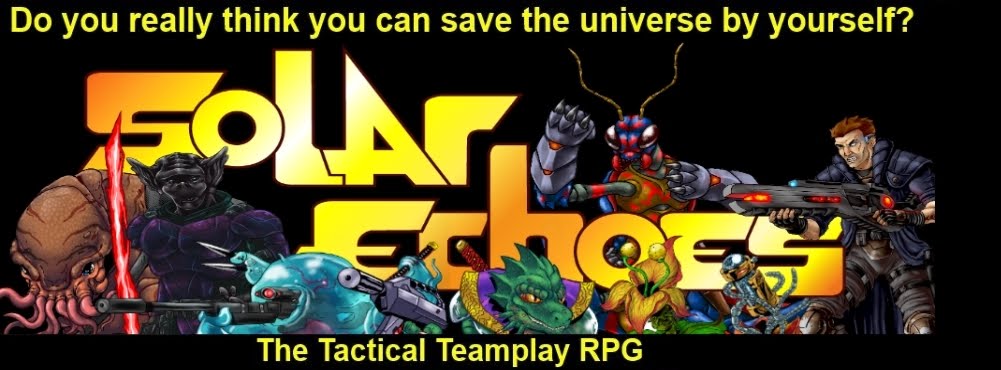
As seven alien races struggle to co-exist in an uneasy alliance, the Inter-Stellar Union sends Union Guard agents on missions to preserve the crucial balance. These specialized operatives must do what regional security cannot, dealing with smugglers, pirates, terrorists, and even greater challenges in order to bring stability to a universe that needs it desperately. Without the Union Guard, the races will not be prepared to face a looming alien threat they can only hope to defeat together.
Tuesday, February 11, 2020

Monday, February 10, 2020
How to Build a Game (part 1/5)
Whether you are are an aspiring video
game developer, a board game designer, or a tabletop RPG designer,
the first question is often the hardest to answer. Where do you
start? The options are overwhelming, and can cripple you as you sift
through the possibilities. There are some development tools available
to game designers that will help you narrow it down, such as the
video game design program, Unity. As you explore Unity, you’ll see
templates available for a variety of different video game genres.
First Person Shooter, RTS, or RPG? 2D platformer, or 3D space
shooter? The designers of the Unity program know that the first step
you need to take in any type of game design is to decide what type of
game you want to make. Deciding on parameters is a crucial step,
because having limitations will keep you focused. Endless options are
the enemy of the creative mind, though it might seem counterintuitive
to suggest this. Think of it this way: if you were told to write a
music composition and were given every note to use, you’ll
immediately want to narrow things down a little and make some
decisions. Should it be in a major key, a minor, or something else?
What type of meter do you want to use? What style do you want to
write in? Game designers need to make the same types of decisions
before starting in order to begin producing something cohesive.
Friday, February 7, 2020
Social or Antisocial Tech? (part 5)
So, researchers, sound the alarm if you
want to, and try to raise awareness of the social dangers technology
will cause us. It never hurts to be wary. I do understand that
sometimes sitting at the dinner table with family and everyone is
looking at their phones can be a bad sign, but all it takes is a
little decency to put those phones down when somebody decides they
want to say something. It is natural to have a lull in conversation
even among close family, and I don't think there's anything wrong
with picking up a smartphone to check messages or browse online if
you're bored. But like anything else--it doesn't matter what you're
doing—we just need to have the common sense to prioritize others
over ourselves and to look up from those phones when they want to
interact with us. None of us are going to be around forever, so we
shouldn't miss the opportunities we have to talk with each other. As
long as we're communicating—and this depends on how we manage
it--technology might actually be a bridge, not an obstacle.
Thursday, February 6, 2020
Social or Antisocial Tech? (part 4)
Technology has also allowed us to
connect more quickly and freelywith each other than before. Facetime,
Skype, and other video chat platforms allow for people to connect and
talk through a smartphone, computer, or TV screen. My daughter has
performed violin music for my parents over an online chat session,
which is a great way for our families to connect despite living at
opposite ends of the U.S. I use videochat to conduct business as
well, and have good conversations with my clients regularly as if
they are right in the room with me. Texting, snapchat, and even
messaging through Twitter have also connected us more, and though
Elon Musk asserts that we are already cyborgs—communicating with
each other through typed text more than the spoken word—it is far
more efficient than making a phone call, waiting for an answer,
leaving a message, and then waiting for a call back, which usually
comes at the most inopportune moments. Texting can be done instantly
no matter where you are or what you're doing, can be read whenever
its convenient, and rarely take more than a few moments to respond
quickly. I've interacted more with my teenage daughter with texting
throughout the day than I'd normally be able to interact with
her—sometimes I get home from work so late she's already asleep and
I've barely talked with her the entire day. We have fun, sharing
stories, funny emojis and memes, and just being a part of
each-other's daily life.
Wednesday, February 5, 2020
Social or Antisocial Tech? (part 3)
Another way that technology has
improved my social interaction is through online gaming. I'll admit,
I'm not much of an online gamer because I enjoy the solitude of
single player games after a long day at work talking with people.
But, I do enjoy meeting with a few online friends to play a game
together that we both enjoy, chatting about life while playing at the
same time. I'd be surprised if some of you said you'd never secretly
played a video game during a phone conversation with someone, so it's
not much different talking during an online game session. People
rarely choose to gather just to talk, but the excuse of a shared
activity often brings out the best conversations. Amateur games of
golf aren't usually about the sport as much as they are about the
social experience of walking around together outside, so just like
any other hobby, indoor or outdoor, online multiplayer games are a
great reason to get together and socialize. Plus, they're a lot more
affordable as hobbies than something like golf, they are unaffected
by weather, and they require zero travel time. Online games are a
perfect choice for someone like me who hates driving and being
outdoors!
Tuesday, February 4, 2020
Social or Antisocial Tech? (part 2)
While it is certainly true that I make
fewer phone calls from home than I used to, the fact that I can carry
my smartphone with me and talk anywhere has actually improved my
relationships with friends and family. Life is so busy these days,
with work plus family to take care of at home, it becomes less and
less practical to set aside time to sit down at home and pick up the
phone to call and talk to a family member or a friend. They're often
just as busy as I am, so finding a time to set aside to just talk can
be difficult. For me, the best time to talk is during my long
commutes to and from work, and I often call friends or family during
these times. It's a great time to catch up, and I don't feel
impatient or hurried with the conversations, because there's nothing
else I can run off to do if I'm sitting in busy traffic. My
relationship with parents and close friends has improved a lot over
the years thanks to smartphones—I'll call and talk with them
several times a week instead of letting weeks elapse before making
the time to sit down for a landline conversation at home. I don't
even have a landline anymore, either...do you?
Monday, February 3, 2020
Social or Antisocial Tech? (part 1)
Is technology making us anti-social?
This question is being asked more and more lately, and researchers
have been saying yes, it does. Yet in my experience, I believe the
opposite is true, and I don't think my life is that different from
yours. Researchers assert that with portable computers and
smartphones, we are connecting more often with people in the virtual
world, but we communicate much less with people in the real world. I
won't argue that there are definitely some people that have an actual
problem and are too invested in their devices, neglecting real-world
relationships to a degree that is unhealthy. But there will always be
outliers in every situation—those examples are certainly not
something to panic over. As social communication through technology
has advanced over the years, I've actually found it to enhance my
relationships with people in the real world, rather than hurt them...
Subscribe to:
Posts (Atom)