I try to keep my VR library as varied
as possible so that I can try new experiences out. Unfortunately,
many of the VR games available are “wave shooters,” but
developers have been getting past this lately and have been putting
out other experiences. One genre missing from my VR library was
horror, and honestly, I procrastinated exploring this area
intentionally—I'm just not a fan of cheap jump scares and
ridiculously contrived “scary” games and movies. There are a few
good ones out there that will unsettle you (Silent Hill, anyone?) but
I wasn't looking forward to trying horror in VR. Still, I took the
plunge and bought a VR game called “The Inpatient.” One of the
things that intrigued me about it from reviews was that you have a
full-body avatar, which I think is utterly essential for immersion in
VR. Developers argue that clipping and odd body movements can pull
you out of the experience, but the disembodied hand solution is even
worse, in my opinion. So, I bought the Inpatient Saturday night,
turned off all the lights (I was all alone at home that evening) and
began the story, strapped to a chair in Blackwood Pines Sanatorium...
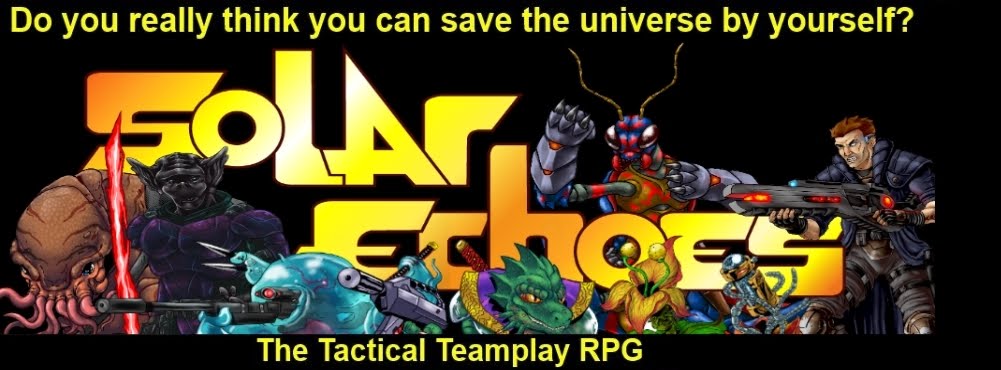
As seven alien races struggle to co-exist in an uneasy alliance, the Inter-Stellar Union sends Union Guard agents on missions to preserve the crucial balance. These specialized operatives must do what regional security cannot, dealing with smugglers, pirates, terrorists, and even greater challenges in order to bring stability to a universe that needs it desperately. Without the Union Guard, the races will not be prepared to face a looming alien threat they can only hope to defeat together.
Wednesday, June 20, 2018
Tuesday, June 19, 2018
My VR Getaway (part 2)
In DriveClub, the game/simulator
defaults you to a 1st-person point of view, which I liked the most. I
couldn't see my entire body, but I could see my VR hands on the wheel
and they responded as I moved them. I could look around me and see
the interior of the car, and the view outside my car was framed by
the unique window view of each car I drove. One of my favorite cars
was a concept car that was a convertible, because it had the best
view of the surrounding area. Driving at high speeds in VR is very
exhilarating, and though I couldn't feel the air rushing past my
face, I did feel an interesting rushing sensation in my ears and
body. I never suffered VR sickness when sitting with the 1st
person interior view, but when I tried out the chase cam (which put
me in 3rd person view outside the car, floating slightly
above and behind it), I did get queasy fast and decided I wouldn't be
trying that again while my car was moving. Sometimes I'd take a
corner too fast or try to nudge my way past another competing car in
the race, and my vehicle would spin out of control. A year ago, I
lost control of my own car on a rainy road as I turned a sharp
corner, and my car spun around twice (nobody was injured and I only
scraped my bumper on the burm, thankfully!) Amazingly, though, I felt
that same exact sensation when I lost control of my virtual car in
DriveClub and spun out of control!
Monday, June 18, 2018
My VR Getaway (part 1)
I spent a little time this weekend
going places and doing things I probably won't have the chance to do
in real life—and that can be a very good thing. I had experiences
last weekend that I still remember like I lived them and did them
myself. That's the thing about Virtual Reality for me—my mind
remembers things as if I'd really been there. There's just something
about being able to look around with 360 degree vision and depth
perception that tricks your brain into processing the experience as
something you actually went through. I decided to take advantage of a
sale Sony was having this week and I downloaded one of the PSVR
release games, DriveClub, for only $5. I've always liked racing
games, ever since Gran Turismo began, and I've learned a lot about
cars, how to approach corners at high speed, and have even been able
to induce drift to slide around corners. Back when I played Gran
Turismo a lot, it actually changed how I drove on the road, though
I've never tried drifting in real life. However, playing a car
simulator in VR is something else entirely!
Friday, June 15, 2018
Censorship or Complete Freedom? (part 5)
Valve stated that the only games they
won't allow on Steam are those that are “illegal, or straight up
trolling.” What's the standard for trolling, though? Already, some
developers have tried to submit games to Steam that were obviously
generated to be offensive to one demographic. For instance, one game
was designed where you have to hunt down and kill people of a certain
sexual orientation. In my opinion, the video game industry doesn't
need more vilification—politicians have been after games for
decades, often condemning them for many of the ills in this society.
Valve's move will likely bring out the very worst kinds of games to
the public when these types of games were formerly available a bit
more in the shadows on porn and torrent sites. It is uncertain if
Valve will be placing any age restrictions on the games sold on
Steam, though currently they do display ESRB game ratings for some
(but not all) games. One sci-fi war-game I randomly viewed gave me
this warning: “Content in this product may not be appropriate for
all ages, or may not be appropriate for viewing at work,” but there
was no ESRB rating. I'm not certain if there is any means in place to
restrict young children from being able to see images or video from
the game, and simply click past minor age warnings and purchase the
game. Ultimately, the question of censorship is a bigger one than
just what is happening on Steam. Do we really want to abandon all
standards in our society in the name of absolute freedom? Society
without law (ie, censorship of absolute freedom) becomes anarchy.
Censorship can lead to tyranny, but a total absence of it can lead to
anarchy. At the very least, it will be a very interesting social
experiment to see what happens with Steam in the coming years...
Thursday, June 14, 2018
Censorship or Complete Freedom? (part 4)
A gamer in favor of complete freedom on
Steam posted about “prudish whiners,” saying, “If they see a
game they don't like, all they have to do is not buy it.” Yet
another gamer posted, “This just makes the platform more prone to
even more garbage and Steam really doesn't need more garbage.” It
is true that people can “vote” their objections by simply not
purchasing something they object to, but as the second gamer posted,
there will be more and more “garbage” to deal with. It is no
doubt that the removal of censorship will result in a massive influx
of garbage onto the platform, and though people can choose not to
purchase it, they will still have to wade through it to find what
they are looking for. Garbage can crowd out good material, and as
this happens, it is likely that there will be a shift in the type of
gamers that make use of Steam. Some will simply abandon the platform
altogether as it fills up with garbage, while a new user-base seeking
that garbage will arrive and dominate. As this shift occurs, game
developers will play to the market on Steam, and more garbage will be
made to accommodate those that seek it. Eventually, some developers
seeking an audience for their “non-garbage” games will leave, or
alter their trajectory entirely and make garbage themselves to keep
up with demand.
Wednesday, June 13, 2018
Censorship or Complete Freedom? (part 3)
The argument against censorship is that
the government shouldn't behave like a “nanny state,” deciding
for the individual what is and isn't appropriate for them, “forcing
their morality” on the rest of us. Many agree that the government
shouldn't be able to dictate personal choice, so it's easy to then
conclude that complete freedom is the correct answer. However, there
are also serious repercussions for absolute, complete freedom—we
often take our freedoms for granted, but we also fail to notice that
people in civilized societies don't actually have complete freedom.
We obviously have laws that we must obey—it is illegal to drive as
fast as you want on the road or take something from a store that you
haven't paid for. Laws and restrictions exist to keep us civilized,
for without them, anarchy would result with everyone determining
their own personal truth about anything and everything: Why
shouldn't I be able to drive as fast as my car can go? Why do
I have to pay for that when I really need
it? Yet what does all this have to do with getting rid of
censorship? How is total, unrestricted freedom on Steam a bad thing?
Some will argue: If it's not hurting anyone, what's the problem?
Tuesday, June 12, 2018
Censorship or Complete Freedom? (part 2)
Some gamers applaud Valve's move to
make Steam censorship-free. One gamer stated, “I really don't get
why we should control what kind of games people are playing. So
thumbs up for Valve.” This statement encompasses the view of many
of the gamers reacting to the decision. A little background on
censorship in gaming is helpful in understanding some of the
opposition to censorship many gamers have formed in recent years.
Australia, for example, is well-known as a country strict on
gaming—like most other countries, they have their own rating system
for games, but they go further and outright ban the import of some
games commonly sold around the world. Games like the Grand Theft Auto
series, and even Bethesda's renowned Fallout 3 were banned from
Australia entirely. Fallout 3 was initially banned because of
"realistic visual representations of drugs and their delivery
method (bringing) the 'science-fiction' drugs in line with
'real-world' drugs." Bethesda agreed to change the name of the
Morphine drug to “Med-X” in the game and was finally approved for
Australia. It is likely that Australia will make a move to block
Steam from their country for the recent removal of censorship on the
platform. The point is, the standards for censorship can sometimes be
rather ridiculous and prevent great games from being available to
gamers. A ratings system where consumers can make their own decisions
is often a solid solution, but Australia goes a step further with
outright government bans on some games. Is that going too far?
Subscribe to:
Posts (Atom)

