With incredible improvements in
technology over the last few decades, games have become so impressive
visually that some of them are almost indistinguishable from movies.
Developers should remember, though, that realism doesn’t equal fun.
Just like movie directors got caught up in the use of the boost in CG
special effects in the 90’s, game developers can also get caught up
in what they are able to include in a game. Some developers lose
sight of what makes a game fun and instead focus on making it look
incredible with astounding amounts of detail, realistic physics, and
full-motion acting. There are some games where player involvement is
minimal and simple, with button-timed events and possibly a few
choices available to make along the way. A game needs to empower the
player to feel like he/she is making a difference in the game world
each step of the way, rather than having a small vote during a mostly
passive experience. Other problems can occur when developers add in
things that detract from the overall fun. For instance, it’s seldom
fun when a game character has to interrupt normal gameplay and search
for food so his steadily draining health doesn’t reach zero, just
because he needs to eat at regular intervals.
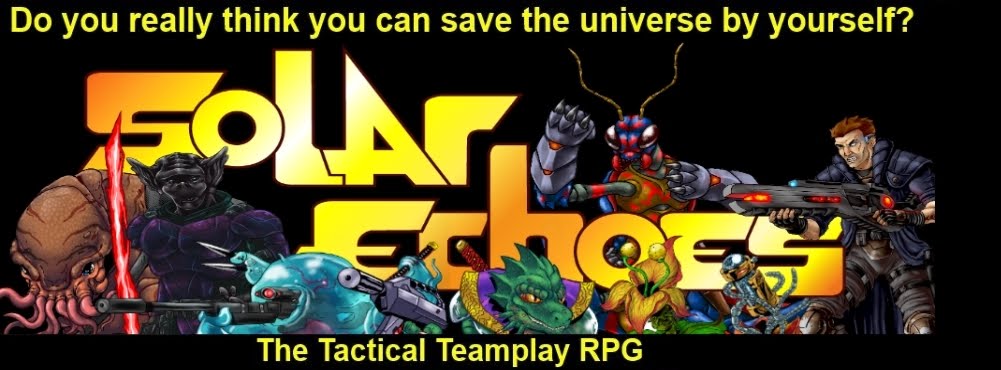
As seven alien races struggle to co-exist in an uneasy alliance, the Inter-Stellar Union sends Union Guard agents on missions to preserve the crucial balance. These specialized operatives must do what regional security cannot, dealing with smugglers, pirates, terrorists, and even greater challenges in order to bring stability to a universe that needs it desperately. Without the Union Guard, the races will not be prepared to face a looming alien threat they can only hope to defeat together.
Tuesday, April 10, 2018

Monday, April 9, 2018
Tips to Game Developers (part 1)
Last week I talked about some of the
struggles game developers have in the gaming industry. What is the
answer for game developers? It sounds simple: Make great games! But
this is much easier said than done, and many who try will fail.
However, I think there are a few essential elements that are
necessary for a game to have a chance, and though some games have
done well without a few of these, the chances of success are notably
increased if they are present. Many gamers have full-time jobs,
families, or are busy in school, so they might not be able to sit
down with the same game day after day. They might play several
different games before they get back to your game. Games that don't
allow save-anywhere but require large chunks of time investment to
get to a “save point” are less likely to appeal to busy people.
If your game doesn't include solid save options and quest logs to
point a forgetful player in the right direction when they get back to
your game, it will likely be abandoned. Those of us who have spent
money on a game and faced this now scout reviews for indications of
these features in your games. It can be a deal-breaker.
Friday, April 6, 2018
The Tides of the Video Game Industry (part 5)
What can a game developer do? Gamers
look beyond the game itself, considering not just the genre/type of
game or how it looks, but also how it stacks up against other games
being released, how many hours of content it boasts, how large of a
file size it is, and of course, price. As a consumer, I end up
mentally assigning a price to a game I'm looking at based on how it
appears to compare with other games I've seen and/or played. Even if
the game is something I'm interested in, if my mental price-tag says
the game is only worth X-amount of $, I'm not going to consider
buying it until it hits that price or lower. The crazy thing about
this is, sometimes we're only talking about a $5 game! It's
ridiculous that someone wouldn't be willing to shell out $5 to try
something new, but because there are so many other options available,
and because this stuff adds up, gamers exert a self-discipline that
emerges from the judgment of what they think the game is really
worth, and they won't budge until it hits that price.
As a game developer myself, I know the
difficulty of pricing, because to remain profitable--or at least
recoup the money originally invested in making the game--the product
sometimes needs to be priced out of range of what others might
ascribe as “fair.” The gaming community usually doesn't think
about the difference between small, independently produced games and
games produced by huge companies. For that matter, the gaming
community also doesn't consider the difference between crowd-funded
games (and the quality boost crowd-funded games enjoy) and those that
are independently funded. They bring their judgments of a “fair
price” from their total game purchasing experience, which includes
all of the above. Surviving in this industry is a precarious and
volatile existence. Next week, though, I'll talk about a few things
that are likely to give game developers a boost in their chances!
Thursday, April 5, 2018
The Tides of the Video Game Industry (part 4)
One trick that indie-game companies use
is a stealth fake-out approach. They don't let anyone review their
game before-hand. They are very secretive about their game--you may
have never even heard of it until you see it available on release
day--and they use flashy advertising with amazing-looking art or even
feature an attractive woman somewhere in the game art or in a
screen-shot of the game. This approach relies on impulse buys, where
gamers see that the game isn't too expensive, the art catches their
attention, the description sounds cool, and maybe it looked good from
a few screenshots or limited videos of gameplay that were
strategically released online. Thankfully, most online stores have
rating systems that buyers can use to rate the game they bought, and
most gamers will come back and rate a bad game with low marks to warn
others away. But often, it's too late—the developers have made the
sales they needed on that first day before the reviews came out, and
if you're not wary, you might end up buying another bad game someday
by the same developer if you forget your first experience with them!
Wednesday, April 4, 2018
The Tides of the Video Game Industry (part 3)
You may have a gamer friend that you've
tried to convince to get a game you like, and your friend responded
with something like, “I've already got a huge backlog of games I
bought that I haven't played yet.” I remember a few weeks ago there
was a sale online and I bought 3 different games for a total of $11
for all three. These three games used to be priced at $60, $30, and
$20. I haven't solved any of them, but I do put a little time in on
one or the other once in a while at the end of a work day, if I'm in
the mood. Two of these games were indie-games, and they were released
less than a year ago, so seeing such a huge price drop made me think
about indie-developers and how they survive. Like the big game
companies, the indie companies rely heavily on the sales of the
initial release week. Unlike the big game companies, though, they
don't have huge marketing campaigns with tons of money to hype their
game. Sometimes, they'll be lucky if they're even noticed among the
10 to 20 other indie games being released that same week, and they'd
better hope they're not going up against a major game title put out
by a large developer!
Tuesday, April 3, 2018
The Tides of the Video Game Industry (part 2)
One thing that major developers are
doing to avoid being lost in the crowd is something they've always
done—push their product with huge marketing campaigns. Developers
know that the first week of release is the most important, because
within a week there are other new game releases that might distract
potential buyers away from a purchase. Reviews also come out
lightning-fast these days, so quick that often a review can be found
online the day before (or even earlier) a game is released. Some of
this is because companies send advanced copies out to reviewers
hoping to increase their chances of good sales on release with
positive reviews. Of course, there are always a few reviewers that
put out positive reviews because they're being paid to do so, but for
the most part, you can find a good selection of reviews on a big
title around the release date. Another thing big companies are doing
to avoid losing their initial release sales is the offer of pre-order
bonuses. If you pay for the game before it hits the shelves (or
online stores), you get extra in-game items and sometimes things like
artbooks, plastic figures, CD's with soundtracks, and other physical
swag. All of this is being done to ensure stellar sales at release,
because gamers are easily distracted by the wide array of new
products that are available, and the lower prices of indie games can
easily lure people away from full-priced releases by major
developers.
Monday, April 2, 2018
The Tides of the Video Game Industry (part 1)
The video gaming market is a lot
different than it was a few decades ago, though that goes without
saying. However, beyond the obvious changes that advances in
technology have afforded developers, there is a new factor that has
become much more prominent and continues to grow with each passing
year. We now have access to such a vast selection of games for quick
download that it isn't uncommon for a gamer to have a library of
hundreds of games, many which have been played for an hour or two and
then quickly forgotten. With games available as digital downloads,
some even find themselves deleting unfinished games to make room on
their hard-drives for something newer they'd like to try out. The
“shelf life” of a game these days is extremely short, and it's
rather common to see even major game titles going on sale only a few
months after release. How are gaming companies handling all this,
and how has the consumer influenced marketing approaches?
Subscribe to:
Posts (Atom)